On the night of 15 September 1810 a parish priest rang a church bell in a small town in Guanajuato and called his neighbours to rise against the Spanish crown. Mexico has been ringing that bell every year since.
It happens everywhere at once — the president from the National Palace, every governor from their state palace, and the mayor of Puerto Vallarta from the balcony of the town hall, to whoever is standing in the square below.
Here is what Fiestas Patrias look like in this city, what closes, where to stand, and how to build your days around a fiesta that mostly happens after dark.
What is actually being celebrated
On the night of 15 September 1810, in a small town in Guanajuato called Dolores, a parish priest named Miguel Hidalgo rang the church bell before dawn and called his neighbours to rise against the Spanish crown. The war that followed lasted eleven years. Mexico marks the beginning of it, not the end — which is why the party is on the 15th and 16th and not in September of 1821.
Every year the whole country reenacts that bell. The president does it from the balcony of the National Palace in Mexico City; every governor does it from their state palace; and every mayor of every municipality in Mexico, including Puerto Vallarta, does it from the balcony of the town hall, to whoever is standing in the square below.
September 2026 marks 216 years. Here is what that looks like in this city, and what it means for the days you have here.
September is a whole month, not two days
Walk into any Mexican town in the first week of September and you will see it before anyone tells you: green, white and red bunting strung across the streets, flags on the balconies, tricolour lights on the church, and stalls appearing on the plaza selling little flags, whistles, sombreros and things designed to be loud.
In Puerto Vallarta the decoration goes up along the Malecón, around the Plaza de Armas and through the Zona Romántica. Schools spend the month rehearsing. If you are here any time in September you will get the atmosphere whether or not you are here on the 15th.
The night of the 15th: El Grito
This is the main event, and it happens at night.
Through the evening the Plaza de Armas — the main square, between the town hall and the Cathedral, right where the Malecón begins — fills up with families, food stalls, music and a stage. Around eleven at night the mayor comes out onto the balcony with the flag and the bell, and calls out the names of the heroes of independence. The crowd answers each one with ¡Viva!, and it ends with three shouts of ¡Viva México!, the bell, the anthem, and fireworks over the bay.
Things worth knowing:
- It is free and everybody goes. There is no ticket and no seating — you stand in the square with several thousand other people.
- The time moves. Eleven is the tradition, but the municipal programme for the year is what counts. It is published in the local press a few days ahead.
- Get there by nine or ten if you want to be anywhere near the balcony. After that you are watching from the back of the Malecón, which is honestly also fine.
- Downtown parking is hopeless. Take a taxi to the Cuale bridges and walk in, or come on foot from the Zona Romántica.
- Eat before or eat in the square. Restaurants downtown are full that night. The stalls on the plaza are the better plan.
September 16: the parade
The 16th is the actual national holiday, and it belongs to the schools. A civic parade — desfile cívico-militar — runs in the morning through downtown, usually along the Malecón. Marching bands, gymnastics teams, kids in charro outfits and revolutionary costume, the fire brigade, the navy, and horses.
It is genuinely charming and it is over by lunchtime. The practical consequence for you is that streets downtown close for a few hours in the morning, and traffic across the Cuale is slow either side of that.
The other dates in September
- 13 September — Niños Héroes, remembering the cadets who died defending Chapultepec Castle in 1847. Civic ceremonies, flags at half mast in the morning.
- 27 September — the day independence was actually consummated in 1821. Barely marked in the street, but it is the reason the whole month wears the flag.
What closes, and what does not
16 September is one of Mexico's official mandatory holidays. Banks and government offices close. Some shops close. Tourism does not. Restaurants, beaches, boats and tours run as usual — in the tourist parts of Puerto Vallarta it is a busy day, not a quiet one.
In 2026 the 15th falls on a Tuesday and the 16th on a Wednesday, which means no long weekend for Mexican travellers and a calmer, more local version of the holiday than in the years when it lands next to a Sunday. Good news if you were worried about crowds: the city will be busy on the night of the 15th and normal again by Thursday.
How to build your days around it
The pattern that works is simple — adventure in the morning, city at night.
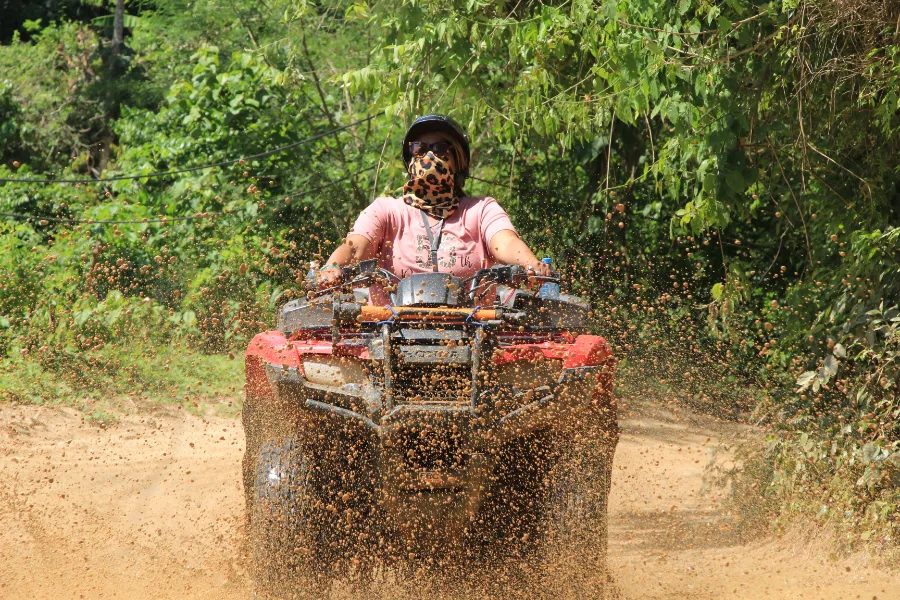
Everything we run starts early and finishes by early afternoon, which leaves the evening completely free for the plaza. On the 16th itself, book something that starts from our shop before the parade closes the streets, or take the day off the streets entirely and go into the mountains.
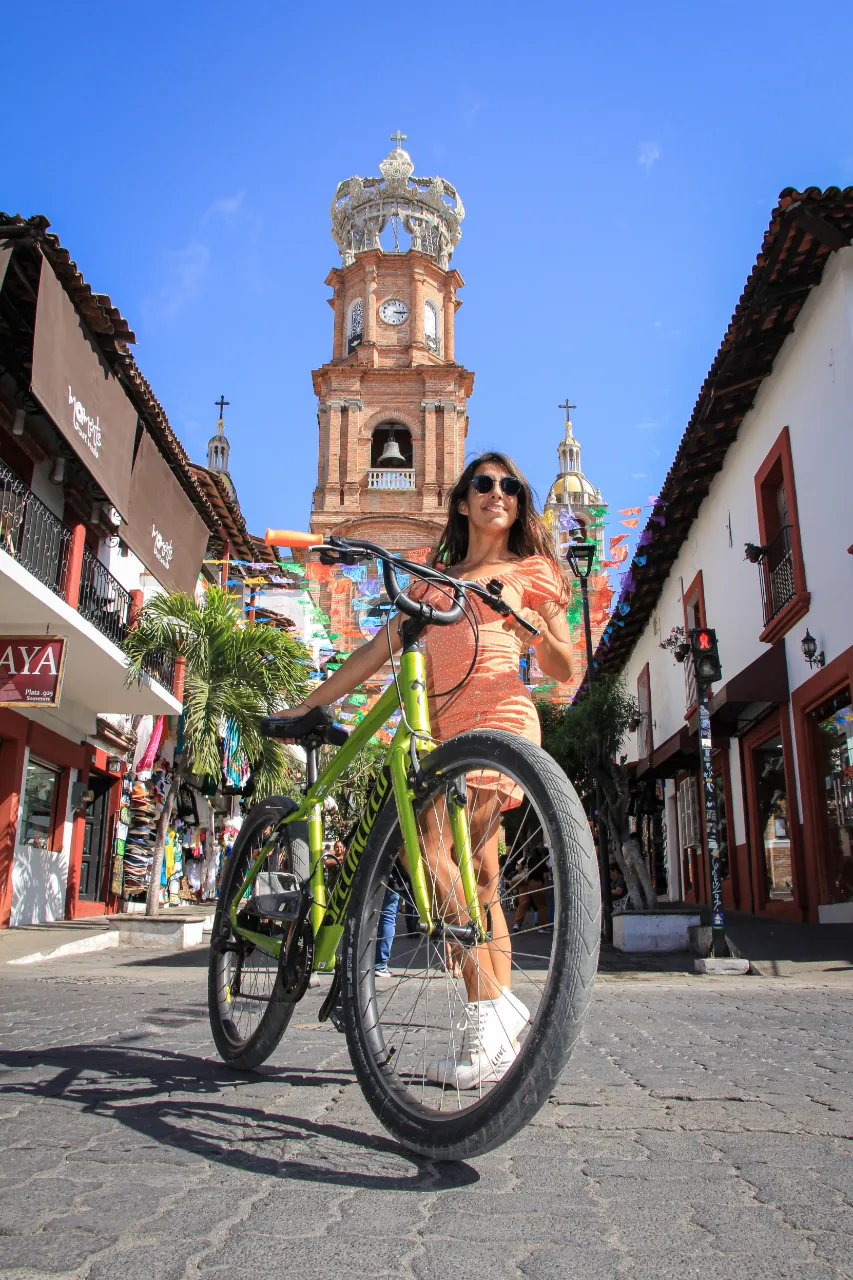
And if you only have one morning downtown in a week full of fiesta, spend it on the Malecón by bicycle. Two flat hours along the boardwalk with stops at the sculptures, the pier, the Cathedral, the Cuale market and the Old Town — the same ground the parade covers, seen properly, before it fills with people. It also quietly teaches you where everything is, which makes finding the square at ten at night on the 15th a great deal easier.
One small confusion, cleared up
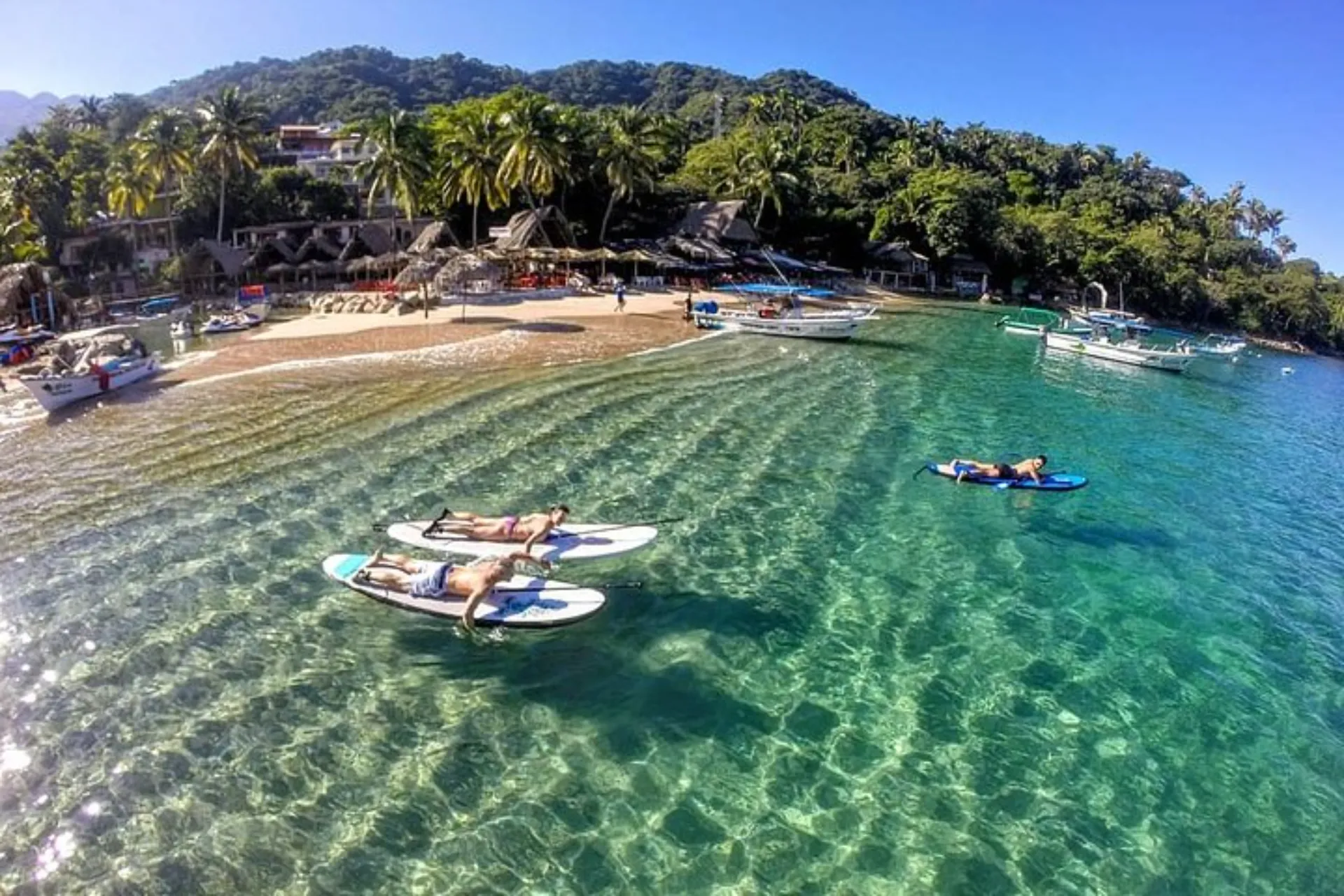
The arches on the Malecón, in front of the amphitheatre where the Grito crowd gathers, are called Los Arcos del Malecón. The rock arches out in the bay that everyone photographs from a boat are Los Arcos de Mismaloya. Different things, twenty minutes apart. If someone tells you to meet them at Los Arcos in September, ask which ones — and if it is the ones in the water, that is a paddle board morning, not a fiesta.
Come for the fiesta, stay for the mornings
September is the month Mexico is most itself, and Puerto Vallarta is a good place to see it: small enough that the square feels like a town's square, big enough that everything else still works. Whatever nights you are here for, the mornings are yours — everything we run is on the tours page, and all of it is private.