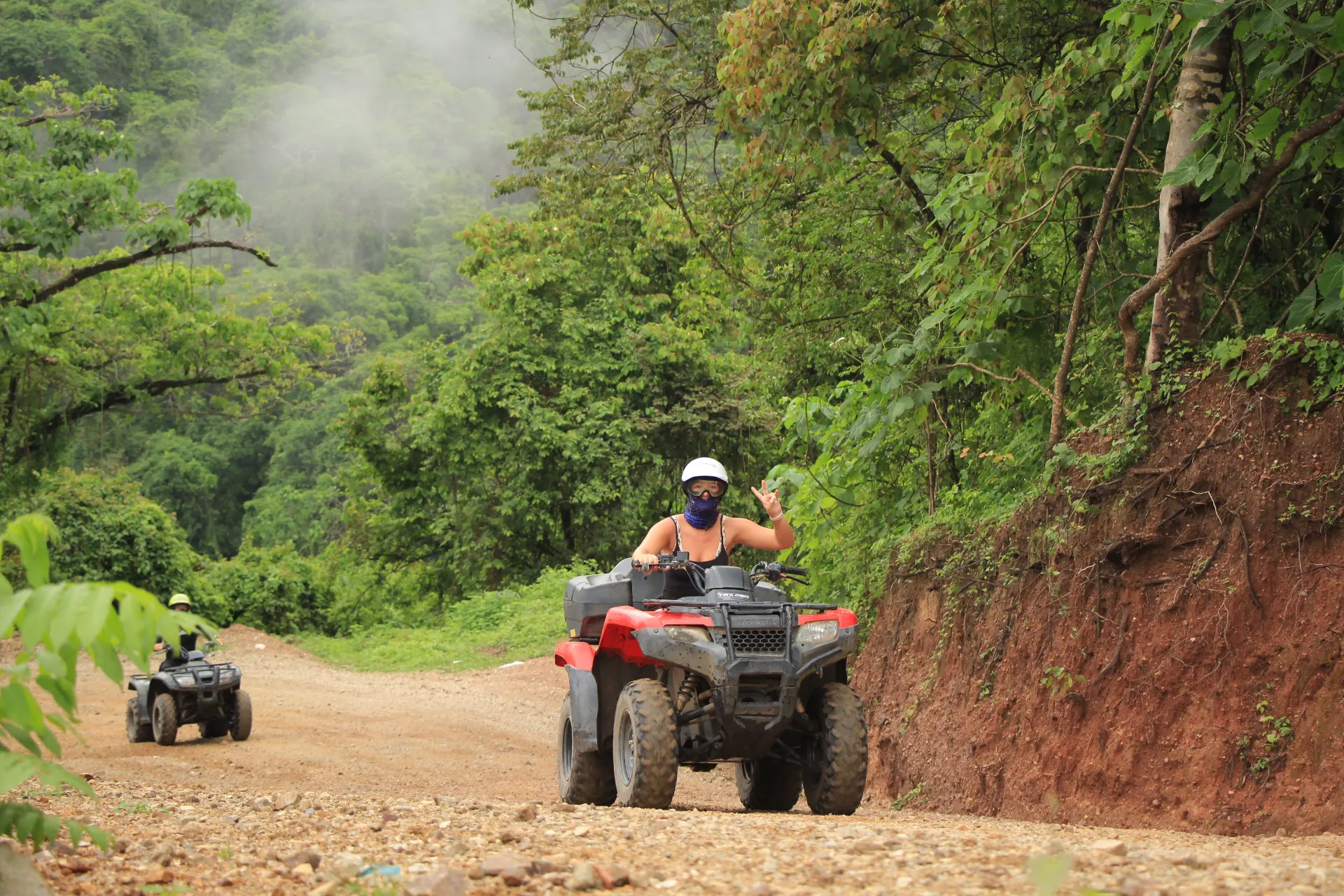
Puerto Vallarta sells itself on the ocean, and the ocean deserves it. But the Sierra Madre rises straight out of the back of the city, and everything that falls on those mountains has to come down somewhere.
Canyons, rock ledges, pools that stay cold in May and run hard in September. And hot springs, because the same geology that built the mountains left thermal water inside them.
This is where the fresh water is, when it is at its best, and how to actually get there.
Filmed on the route by one of our riders.
The bay is not the only water here
Puerto Vallarta sells itself on the ocean, and the ocean deserves it. But the Sierra Madre rises straight out of the back of the city, and everything that falls on those mountains has to come down somewhere — through canyons, over rock ledges, into pools that stay cold in May and run hard in September.
There is also water coming up. The same geology that built the mountains left hot springs in them, and you can sit in one an hour and a half from the beach.
This is the freshwater side of Puerto Vallarta: where it is, when it is at its best, and how to actually get there.
The waterfall you will see on almost any tour
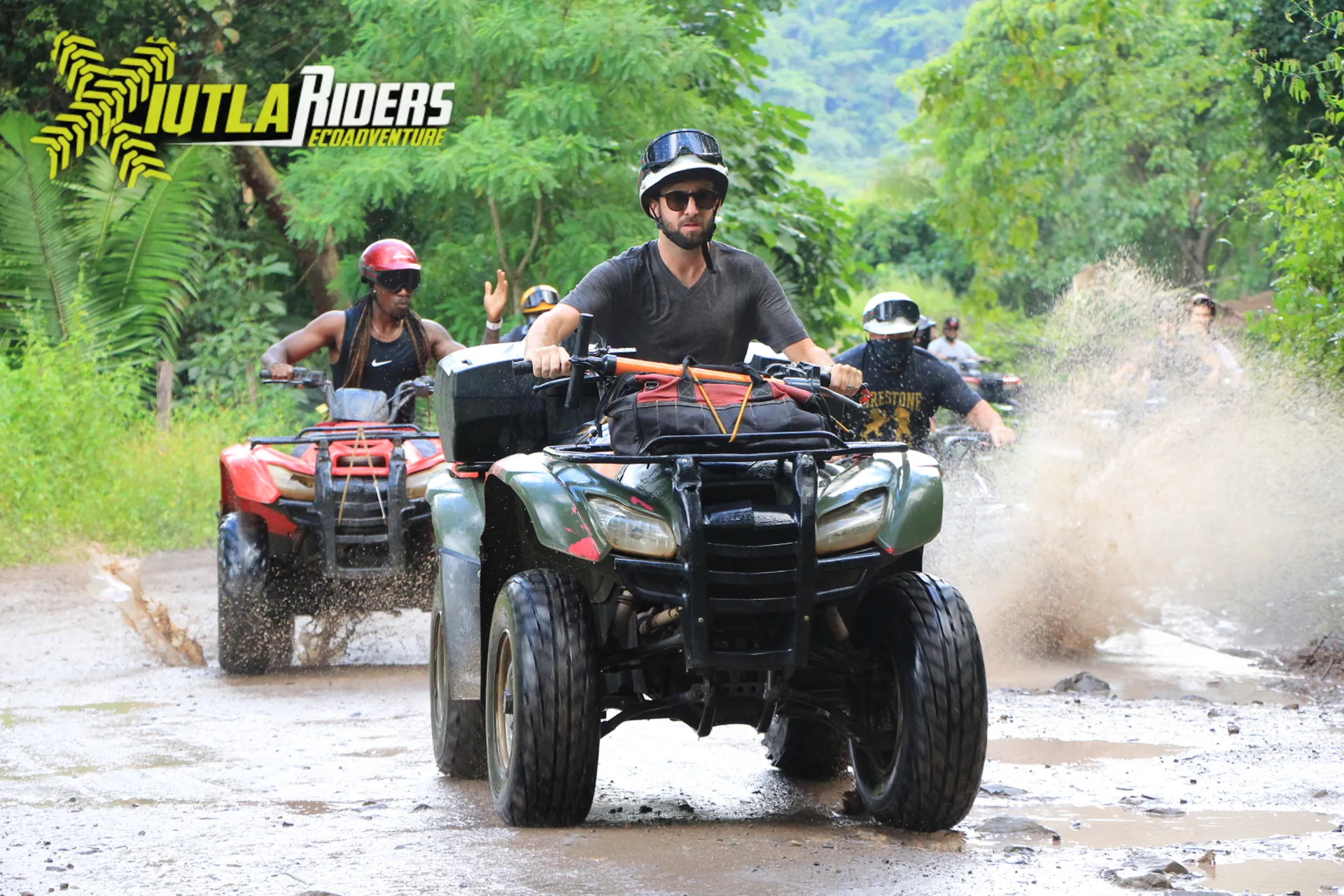
Start with the easy answer: every one of our ATV tours includes a waterfall stop. Not as an upsell, not as an optional extra — it is built into the route, and you can swim in it or stay dry and take photos, whichever you feel like when you get there.
That is worth knowing because most people search for waterfalls near Puerto Vallarta expecting to organise a separate expedition. You do not have to. Pick a ride into the mountains and the waterfall comes with it.
What it is actually like: a stop of twenty minutes to half an hour, cold fresh water after a hot dusty ride, and — because the tours are private — nobody standing around waiting for you to finish.
El Edén: the jungle river
El Edén is the river valley in the mountains behind Mismaloya, and it is the most famous freshwater spot in the area for a reason: dense jungle on both banks, a river running through boulders, and swimming holes deep enough to actually swim in.
Our Private ATV El Edén Tour is four hours and takes you there on the trails rather than the tourist road. Swimming is optional, the waterfall stop is included, and because it is private you get a choice partway through: keep going on more trails, or drop down to a small fishing village and eat.
Go in the morning. By early afternoon in high season the valley has company.
The Río Cuale, from above
Most visitors meet the Río Cuale as the island in the middle of downtown — the market, the bridges, the iguanas. Follow it upstream and it turns into something else entirely: a proper mountain river with crossings, pools, and a jungle bar in the middle of nowhere that feels like a local secret because it more or less is one.
The Río Cuale ATV Tour is three hours and this is exactly the route it follows. If you want one day that covers city, mountains, a river and a waterfall, it is the most efficient version of that day we sell.
Hot springs: the long mountain day
The spring waters are further in, and getting to them is most of the point. The Private ATV Sierra Madre Tour to Spring Waters is five hours: up through local communities, a stop in a small mountain town, and then the thermal pools themselves.
Two honest notes before you book it:
- This one is for experienced riders. It is longer and more demanding than the other routes, and that is deliberate. If nobody in your group has ridden before, pick a different tour and tell us you want water — there are better options.
- The pools are rented separately. Food and the spring water pools are not included in the tour price. They are available at the stop, so bring cash.
It still finishes with a waterfall stop and a tequila tasting, like every ATV route.
When the water is best
This is the part nobody tells you, and it changes the trip completely.
- June to October — green season. The rains arrive and the whole Sierra Madre turns green within two weeks. Waterfalls that are a trickle in April are thundering in September. River crossings are deeper, the jungle is loud, and everything is photogenic. This is when the freshwater side of Vallarta is at its absolute best.
- November to May — dry season. Blue sky every day, the trails are fast and dusty, and the rivers are lower and clearer. The waterfalls are smaller but the swimming is calmer and the water is easier to see through.
Neither is wrong. If waterfalls are the reason you are coming, come in the green season and ride in the morning, before the afternoon storm.
River crossings, and when they do not happen
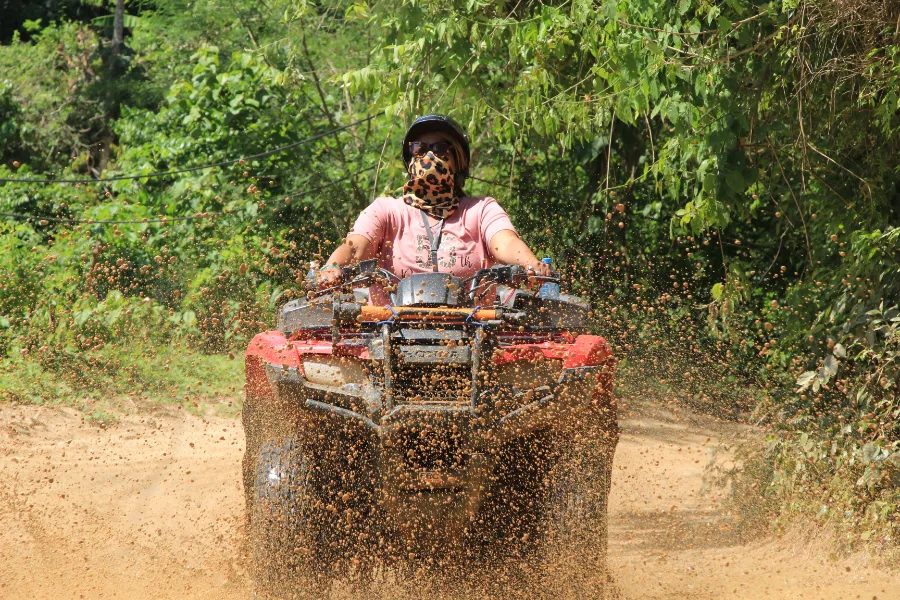
Crossing a river on an ATV is the part everybody films, and it is genuinely fun. It is also conditional: how many crossings the route includes depends on the season and on how much water came down that week. After a big storm some crossings are out, and your guide will reroute rather than take a chance.
That is not a tour being cut short — it is the reason it is worth having somebody who rides these trails every day deciding what is passable today.
What to bring for a water day
- Swimwear under your clothes. There is nowhere good to change.
- A towel. Nobody regrets the towel.
- Closed-toe shoes that you do not mind getting soaked. You will be walking on wet rock.
- Cash for drinks, food and the thermal pools.
- A dry bag or a zipped pocket for your phone. Waterproof cases are worth it here.
- Reef-safe sunscreen, applied before you set off.
If you would rather build your own route
The ATV A La Carte tour exists for exactly this. Tell your guide the day is about water — river crossings, the deepest swimming holes, the longest stop at the waterfall — and the three hours get built around that instead of around a fixed route.
Message us on WhatsApp with your dates and we will tell you what the rivers are actually doing right now, which is a different answer in July than it is in February. All the routes are on the ATV tours page.